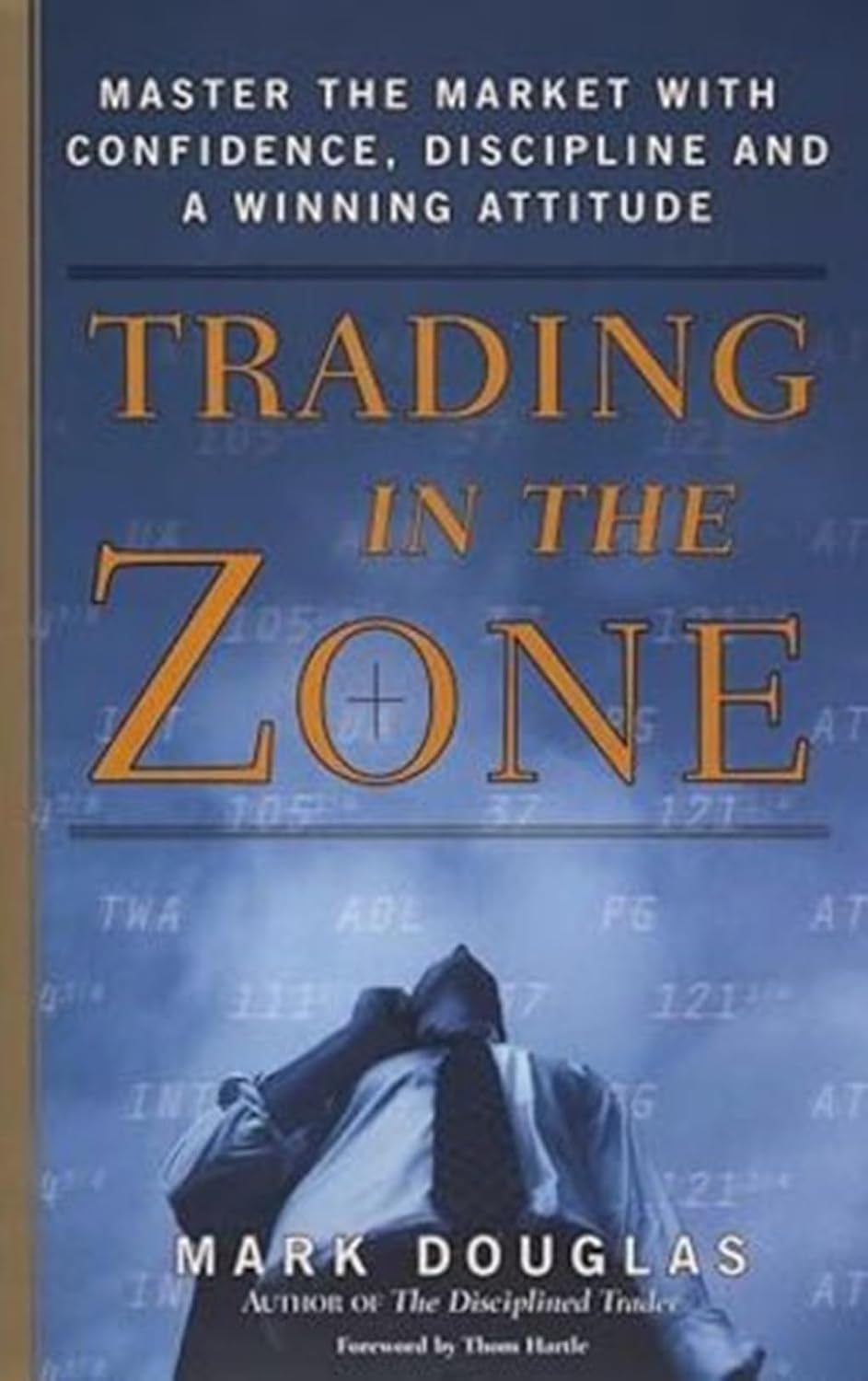
Mark Douglas's classic argues your losing trades aren't a strategy problem — they're a mindset problem. Here's how he says to fix it.
Key Takeaways
- Your trading results reflect your beliefs, not your market analysis
- Think like a casino: uncertain on any single trade, confident over a large series
- The five fundamental truths reframe every trade as random yet statistically favorable
- Rigid rules plus flexible expectations beats rigid expectations plus bent rules
- Consistency is built in the mechanical stage, long before intuition kicks in
About Mark Douglas
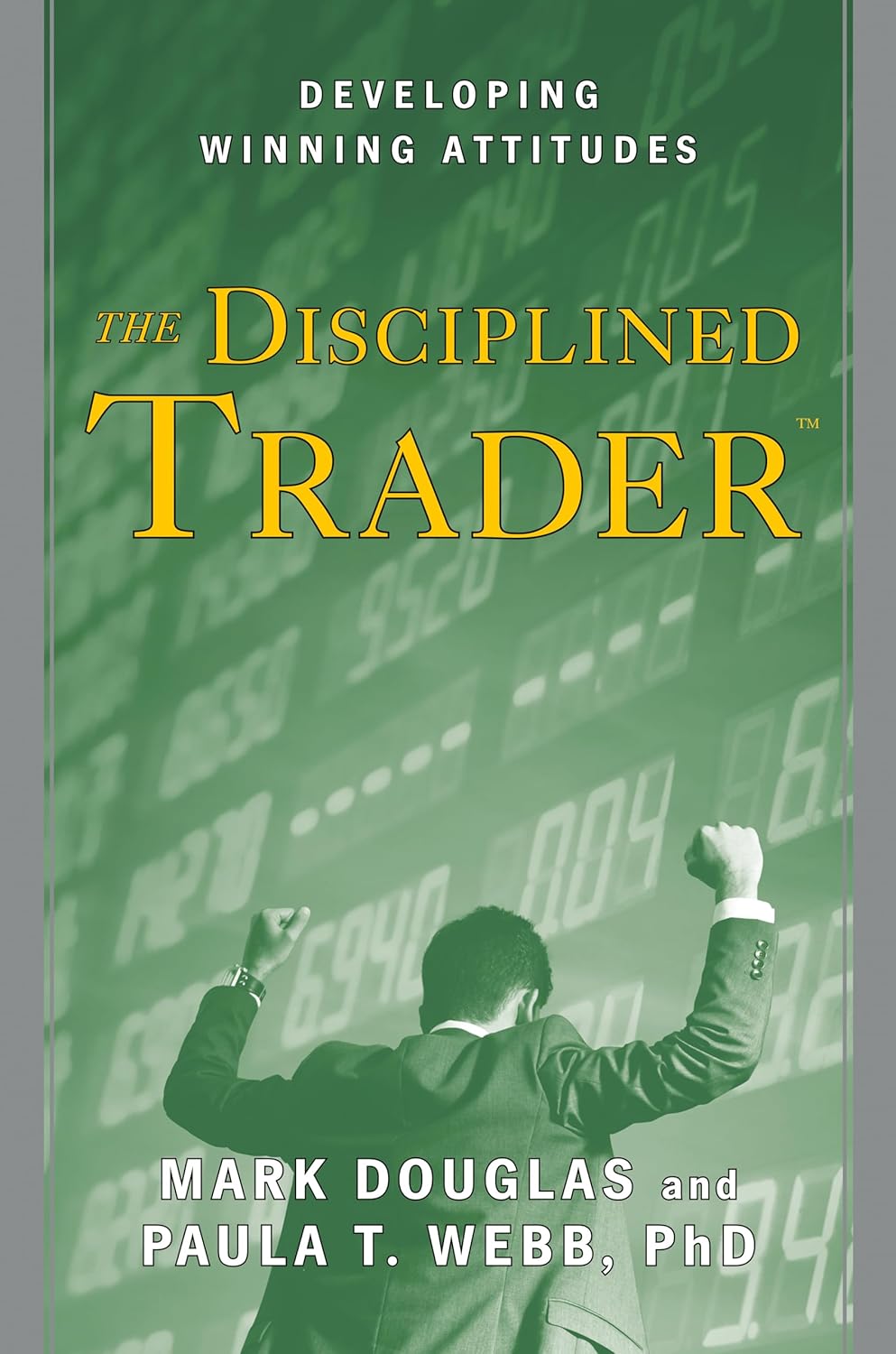
Mark Douglas began trading in 1978 and later worked as a broker with Merrill Lynch at the Chicago Board of Trade before founding Trading Behavior Dynamics, a consulting firm where he ran seminars on trading psychology and worked as a trading coach. He spent roughly seventeen years studying the psychological dynamics of trading and previously wrote The Disciplined Trader: Developing Winning Attitudes (1990).
I picked up Trading in the Zone the way most traders eventually do — not because I wanted a new indicator, but because I'd already found a dozen indicators that worked fine on paper and still couldn't stop myself from breaking my own rules in real time. If you've ever built a solid system, backtested it into the ground, and then watched yourself hesitate, overtrade, or revenge-trade anyway, this book is aimed squarely at you.
Mark Douglas isn't selling a strategy here. He's blunt about that up front. What he's selling is an argument: that the gap between what you know and what you do in the market is entirely psychological, and that closing it requires a specific, learnable way of thinking in probabilities.
What Trading in the Zone Is Actually About
Douglas started trading in 1978 while running an insurance agency outside Detroit, assuming his success in one field would transfer easily to another. It didn't. By 1981 he'd moved to Chicago to trade full time and, within nine months, lost nearly everything. That failure became the raw material for his first book, The Disciplined Trader, and eventually for this one.
His core claim is that market analysis — fundamental or technical — stops mattering past a certain point. Most traders who fail aren't failing because their edge is bad. They're failing because they can't execute their edge consistently, and the reason they can't is psychological: fear, overconfidence, the need to be right, the inability to accept a loss as just a cost of doing business rather than a personal failure.
Key Lessons from Trading in the Zone
The Casino Model of Trading
The idea I keep coming back to months later is Douglas's casino comparison. A casino doesn't know the outcome of any single hand of blackjack — that outcome is genuinely random. What it knows is that across thousands of hands, its statistical edge (roughly 4.5% in blackjack) will produce a predictable profit. The casino stays profitable specifically because it never treats any one hand as meaningful. It just keeps playing its edge.
Douglas argues traders need the same split-level belief: total uncertainty about any individual trade, combined with confidence in the outcome across a large enough series of trades, provided the edge is real. Most traders do the opposite — they treat each trade as if it needs to work, which is exactly what makes them abandon good systems after a losing streak that was statistically normal all along.
The Five Fundamental Truths
This is the spine of the book, and it's the part I'd tell anyone to read even if they skip everything else. Douglas lays out five beliefs he says a trader has to internalize, not just intellectually agree with:
- Anything can happen.
- You don't need to know what's going to happen next to make money.
- There's a random distribution between wins and losses for any given edge.
- An edge is just a higher probability of one outcome over another — nothing more.
- Every moment in the market is unique.
What makes this section land isn't the list — it's Douglas walking through the specific trading errors each belief prevents. If you actually believed outcomes were uncertain, would you ever put on a trade without defining your risk first? Would you hesitate to cut a loss? He uses that pattern repeatedly, tracing bad habits back to a belief you're probably holding without realizing it.
Rigid Rules, Flexible Expectations
Douglas poses this as a paradox he asks workshop participants to resolve: how does a trader learn to be rigid and flexible at the same time? His answer — rigid in your rules, flexible in your expectations — is one of those lines that sounds simple until you notice most traders do the exact opposite. They bend their rules to protect a rigid expectation about what "should" happen, which is precisely backwards from what keeps you solvent.
The Three Stages of a Trader
Toward the end of the book, Douglas maps out a developmental arc: the mechanical stage (build self-trust by flawlessly executing a system and training yourself to think in probabilities), the subjective stage (more freedom, more risk of self-sabotage from unresolved beliefs about your own worth), and the intuitive stage, which he compares to a black belt — something you can't force, only set the conditions for.
The mechanical stage gets the most practical attention, including an exercise built around taking a fixed number of trades with predefined rules purely to practice thinking like a casino, not to make money. It's the most actionable section in the book, and also the one most readers skip because it's unglamorous.
Trading in the Zone Chapter Breakdown
The book moves in a fairly clear arc across its eleven chapters. The opening chapters (1–3) diagnose the problem: why traders drift from fundamental to technical to "mental" analysis, why trading is attractive and dangerous in equal measure, and why taking full responsibility for your results — rather than blaming the market, your broker, or bad luck — is the starting point. The middle section (4–7) builds the theoretical case for thinking in probabilities and introduces the five fundamental truths. The later chapters (8–11) get more practical, working through how beliefs form and resist change, how self-evaluation quietly sabotages good trades, and finally the mechanical-to-intuitive development arc.
Where I'd Push Back
For a book built around the idea of self-honesty, Douglas can be surprisingly repetitive about restating the same core claim — that psychology, not analysis, is the real edge — across multiple chapters before he actually gives you something to do with it. The five fundamental truths and the casino analogy are genuinely strong; a good chunk of the surrounding material is Douglas circling back to reinforce a point he's already made. If you're the type of reader who wants a tight, exercise-driven workbook, you'll find yourself skimming stretches of this.
There's also very little here on position sizing, market structure, or the mechanics of building an edge in the first place. Douglas states outright that he's assuming you already have a system. That's a fair scope decision, but it means this book solves exactly one problem — the gap between knowing and doing — and has nothing to offer if your actual problem is that your edge isn't real.
Who Should Read This
Traders who already have a tested strategy but consistently fail to follow it — the trader who exits winners early, holds losers too long, or abandons a system after a normal losing streak — will get the most out of this. It's less a beginner's guide to markets than a manual for undoing habits a competent trader already has.
Who Should Skip This
If you're still building your first trading system or looking for guidance on technical setups, risk sizing, or market structure, this isn't that book, and you'll likely find it frustrating. It's also a dense, repetitive read for anyone wanting a quick tactical fix rather than a shift in how they think.
How It Compares
Trading in the Zone sits alongside books like The Disciplined Trader (Douglas's own earlier, denser work covering similar ground) and Mark Minervini's Trade Like a Stock Market Wizard, which leans heavily technical where Douglas stays almost entirely psychological. Compared to Minervini, Douglas offers far less on strategy and far more on the mental discipline needed to execute one — the two books arguably work better as a pair than as substitutes for each other.
My Verdict
I'd recommend this to any trader who has a strategy that backtests well but doesn't hold up in live execution — that's a very specific, very common problem, and Douglas addresses it more directly than most psychology-of-trading books manage. What surprised me most was how little of the book is about "confidence" in the motivational sense and how much of it is a fairly rigorous argument about probability and belief systems. My honest pushback is on length and repetition: the core insight could be delivered in half the pages, and the payoff — the mechanical-stage exercise — arrives quite late for how central it is.
If this sounds like the piece missing from your own trading, check the sidebar for my condensed notes and related resources — they're a faster way back to the five fundamental truths without re-reading the whole book.
Notable Quotes
“"Anything can happen."”
“"You don't need to know what is going to happen next in order to make money."”
“"We have to be rigid in our rules and flexible in our expectations."”
Who Should Read This
Traders who already have a tested strategy but keep breaking their own rules in live execution — exiting winners early, holding losers too long, or abandoning a system after a normal losing streak.
Who Should Skip This
Beginners still building their first trading system, since the book assumes you already have an edge and offers almost nothing on strategy, position sizing, or market structure.
How It Compares
Compared to Douglas's own denser earlier work, The Disciplined Trader, this book is a more distilled and practical follow-up; compared to strategy-focused books like Mark Minervini's Trade Like a Stock Market Wizard, it offers far less tactics and far more on the mental discipline needed to actually execute a strategy.
Final Verdict
Worth reading if your problem is execution, not strategy — the five fundamental truths and the casino analogy are genuinely useful reframes. What surprised me was how little "motivational" content there actually is; it's closer to a probability argument than a pep talk. My honest critique: it's repetitive enough that the core insight could be delivered in half the length, and the most actionable exercise doesn't show up until the final chapter.