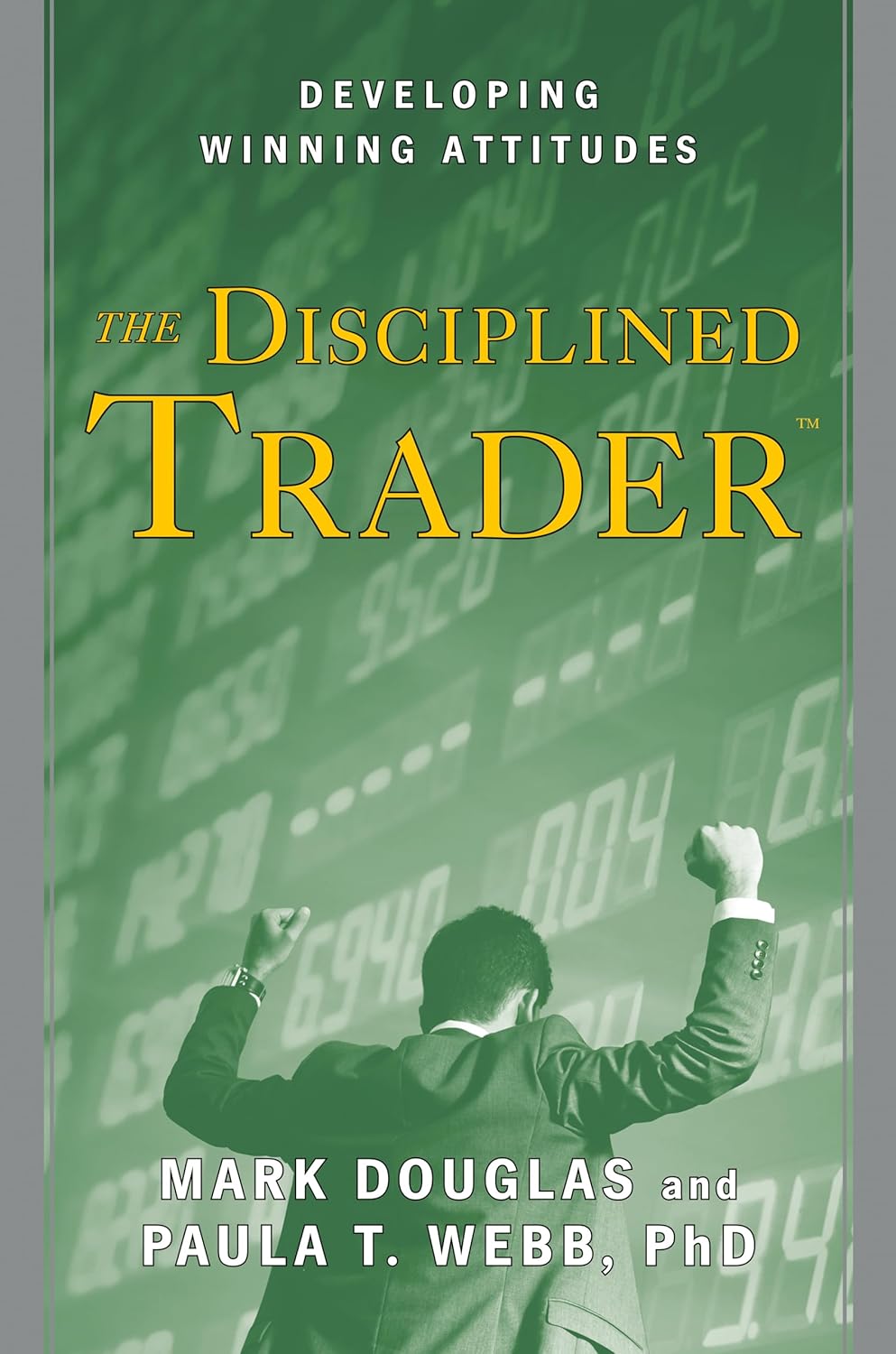
Mark Douglas's 1990 classic argues that trading success is 80% psychological — here's what it actually teaches about fear, discipline, and why your beliefs shape your results more than your method.
Key Takeaways
- Trading success is roughly 80% psychology, 20% method — most traders invest all their effort in the wrong 20%.
- The market doesn't create your experience of it; your beliefs and past history do that filtering for you.
- Self-discipline isn't innate — it's built through painful "forced awareness," not positive thinking.
- Real discipline comes from pre-committed rules, not willpower, which runs out exactly when you need it most.
- No single trade means anything on its own — only your edge across a large sample of trades matters.
About Mark Douglas
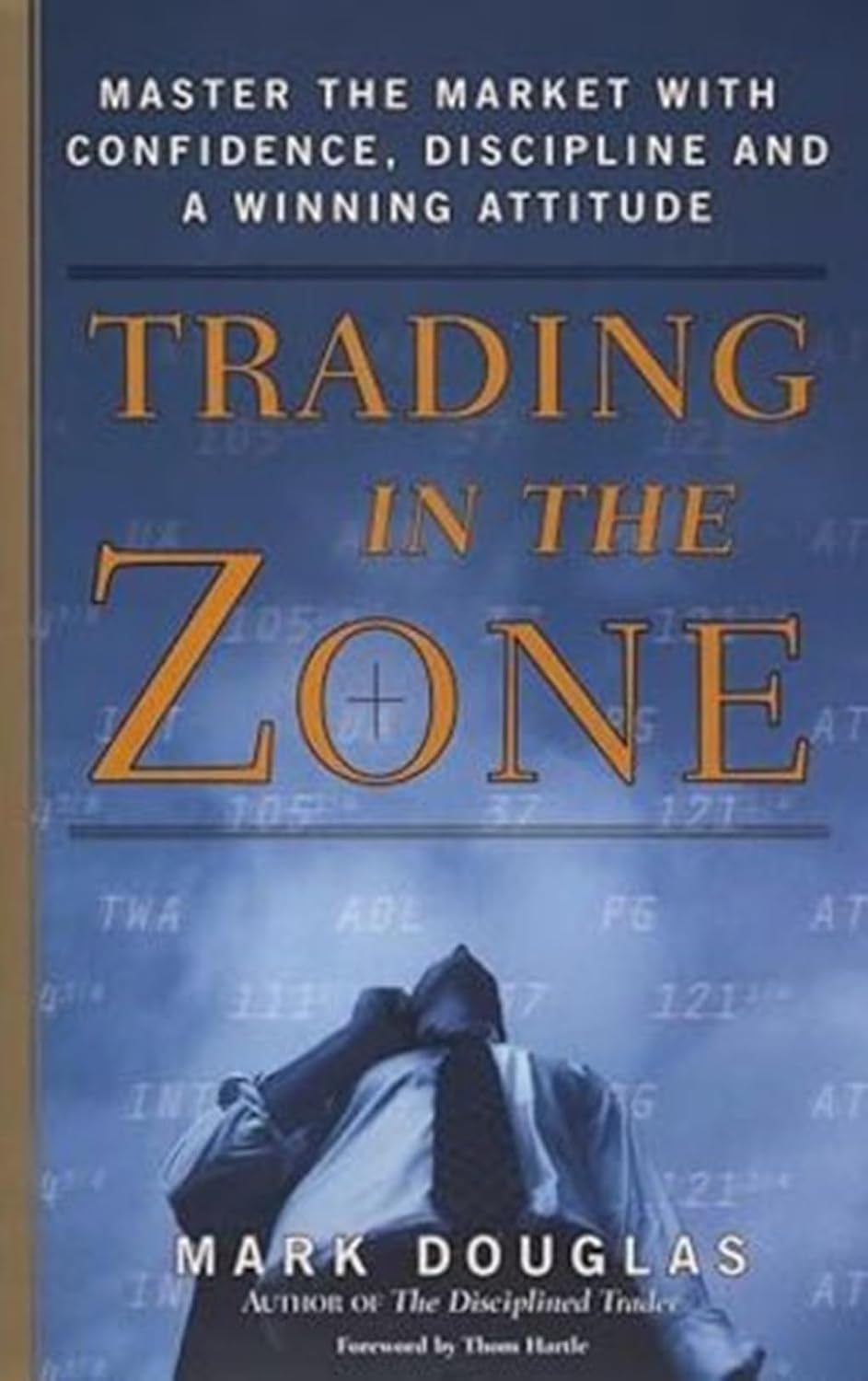
Mark Douglas worked in commercial property and casualty insurance in the Detroit suburbs before moving to Chicago in 1981 to trade futures, where he became an account executive with Merrill Lynch Commodities at its Chicago Board of Trade office. He had already been trading his own account for several years by that point, and his losses as a Chicago trader in the early 1980s became the direct basis for the book's psychological framework. He went on to write a second, better-known book on trading psychology, Trading in the Zone.
I picked up The Disciplined Trader after hearing it referenced so often by other trading psychology books that I wanted to go to the source. Mark Douglas wrote it in 1990, well before "trading psychology" was its own shelf category, and it shows — this book is less a checklist of tips and more a slow, sometimes repetitive argument about why your mind, not your method, decides whether you make money in the markets.
If you've ever built a system that backtests beautifully and then watched yourself abandon the rules the moment real money was on the line, this book is for you. It's not for someone looking for chart patterns or entry signals — there are none here. Douglas isn't interested in giving you a new method; he's trying to explain why the method you already have keeps failing you at the exact moments it matters most.
What The Disciplined Trader Is Actually About
Douglas's central claim is that trading success is roughly 80% psychological and 20% method, and that most traders spend all their time on the 20%. His argument runs like this: the market is an unstructured, unlimited environment. Unlike almost every other part of life, it doesn't come with rules, boundaries, or a defined endpoint. Prices move in perpetual motion, there's no external authority telling you when you're wrong, and the potential for profit or loss is unlimited in both directions.
Most of us were raised in structured environments — school, family, work — where someone else set the rules and enforced consequences. Douglas argues that this conditioning becomes a liability the moment you step into the market, because you show up expecting structure that isn't there, and you unconsciously look for external permission or confirmation that never comes.
The Market Doesn't Owe You Anything
One of the harder ideas in the book is that the market doesn't create your experience of it — you do. Two traders can look at the exact same price tick and one sees a perfect entry while the other sees confirmation of a loss. Douglas insists that difference lives entirely in the trader's beliefs, not in the market itself, which is why blaming the market for a loss is, in his view, a category error.
Key Lessons From The Disciplined Trader
Self-Discipline Isn't a Personality Trait
Douglas is explicit that self-discipline and emotional control aren't things you're born with — they're skills acquired the hard way, usually through what he calls "forced awareness": painful, often financially devastating experiences that strip away your illusions about the market and about yourself. He's candid that he learned this by losing his house, his car, and nearly everything he owned as a Chicago futures trader in the early 1980s.
Fear Is the Real Opponent
A recurring theme is that fear — not lack of knowledge — is what destroys traders. Fear narrows your perception, causes you to see only the information that confirms what you're afraid of, and makes you either hesitate on good trades or freeze on bad ones. Douglas argues that confidence and fear sit on the same spectrum, and that self-trust (built through strict rule-following) is the only real antidote.
You Create Your Own Market Experience
This is probably the book's most repeated idea, stated a dozen different ways: your perception of any given price movement is filtered entirely through your own beliefs, memories, and unresolved emotional baggage. Two traders staring at the same chart are, psychologically, looking at two different markets.
Three Skills Determine Your Results
Douglas breaks trading performance into three components — perception (spotting opportunity), execution (actually pulling the trigger), and accumulation (letting profits build over a series of trades without sabotaging yourself). His point is that most traders who "know" the market well still fail because they're weak in execution or accumulation, which are purely psychological skills.
The Disciplined Trader Chapter Breakdown
The book is organized in four parts that build on each other rather than standing alone as separate lessons:
Part I & II — Why the Market Is Different
Douglas opens with his own story — moving to Chicago to trade for Merrill Lynch, discovering that almost none of the "successful" brokers and floor traders around him were actually making consistent money — before laying out why the market environment (unstructured, unlimited, and indifferent to your reasons) breaks the mental habits that work everywhere else in life.
Part III — Building a Framework for Understanding Yourself
This is the densest section: chapters on how memories and beliefs filter incoming information, why adaptation is necessary, how goals actually get achieved psychologically, and concrete techniques for managing mental energy and changing ingrained beliefs. It reads more like a psychology text than a trading book, and some readers will find it slow going.
Part IV — Becoming a Disciplined Trader
The final section is the most practical, walking through the psychology of price movement and a multi-step process for building the kind of rule-based discipline Douglas argues is non-negotiable — things like defining your risk before entering a trade, monitoring your own commitment to a position, and separating "what is happening" from "what has to happen."
The Psychology of Price Movement
One of the more useful reframes in the book is Douglas's treatment of price movement itself. He asks readers to stop thinking about "resistance" or "support" as fixed, objective features of the chart and instead see them as collective psychological agreements — a price level only matters because enough traders have decided it matters and are willing to act on that belief. When that collective belief shifts, the level stops working, and Douglas argues that traders who treat support and resistance as physical laws rather than shifting group psychology are the ones who get blindsided by breakouts they "shouldn't" have happened.
He extends this into a broader point about probability: no single trade tells you anything meaningful about your system, your skill, or the market's future direction. What matters is your edge played out over a large enough sample of trades. Douglas argues that most traders intellectually accept this and emotionally reject it — they know a losing trade is just one data point, but they feel it as a referendum on their competence. Closing that gap between what you know and what you feel, he says, is most of what "discipline" actually means in practice.
Rules, Not Willpower
Douglas is careful to distinguish discipline from willpower. Willpower, in his framing, is a finite resource you burn through fighting your own impulses in the moment — which is exactly why traders who rely on it eventually break a rule under enough pressure. Real discipline, he argues, comes from building rules so specific and so pre-committed that there's no decision left to make in the heat of a trade. The goal isn't to become someone who can resist temptation; it's to design a process where the temptation never has room to operate.
What I'd Push Back On
For all its influence, this book is genuinely dense and repetitive. Douglas circles the same handful of core ideas — you create your market experience, fear distorts perception, discipline is learned through pain — from a dozen different angles, and a determined reader could probably extract the same value from a third of the page count. There's also very little in the way of concrete exercises compared to Douglas's later book; a lot of the "how" is described conceptually rather than given as a step-by-step protocol you can follow tomorrow morning. If you're the type of trader who wants a workbook, you may find yourself wishing for more structure in a book that's explicitly arguing against needing external structure.
Who Should Read This
Traders who already have a workable technical or fundamental system but keep sabotaging their own results — hesitating on entries, moving stops, revenge trading after a loss — are exactly who this book is written for. It's also useful for anyone who's been trading long enough to have a few painful "forced awareness" moments of their own and wants a framework for understanding what actually happened, rather than just another indicator to bolt onto a chart.
Who Should Skip This
If you're brand new to markets and don't yet have a method or any live trading experience to reflect on, a lot of this will feel abstract rather than actionable — Douglas is diagnosing a problem that mostly shows up once you've had real money on the line and made a few painful mistakes of your own. Readers looking for concrete systems, indicators, or risk-management formulas should also look elsewhere; there's essentially none of that here, and readers who find dense, repetitive psychological prose tiring may want to start with a shorter summary before committing to the full book.
How It Compares to Other Trading Psychology Books
Douglas revisited many of these same ideas more concisely — and with more concrete exercises — in his later book Trading in the Zone, which is generally considered the more accessible entry point. Compared to a book like Jack Schwager's Market Wizards, which teaches psychology indirectly through interviews with successful traders, The Disciplined Trader is far more theoretical and prescriptive, building its case almost entirely from first-principles psychology rather than anecdote.
Verdict & Personal Insight
I'd recommend this book with a caveat: it's foundational reading for trading psychology, but it's not the easiest entry point into Douglas's ideas, and I'd honestly point most readers to Trading in the Zone first. What genuinely surprised me was how personal and unguarded the opening chapters are — Douglas isn't shy about describing exactly how he lost everything, which gives the later, more abstract psychological material real weight. My pushback is on density: this book could have made its case in far
Notable Quotes
“"The markets don't owe you anything"”
“"It isn't you against the markets, it's just you."”
“"You and you alone are completely responsible for whatever you end up with."”
Who Should Read This
Traders with a working system who keep sabotaging their own results — hesitating on good entries, moving stops, or revenge trading after a loss.
Who Should Skip This
Complete beginners without live trading experience to reflect on, and anyone looking for concrete systems, indicators, or step-by-step exercises rather than psychological theory.
How It Compares
Douglas's own later book, Trading in the Zone, covers similar ground more concisely and with more actionable exercises, making it the better starting point for most readers. Compared to Jack Schwager's Market Wizards, which teaches psychology through trader interviews and anecdote, this book is far more theoretical, building its case from first-principles psychology rather than stories.
Final Verdict
This is foundational reading for trading psychology, but not the easiest entry point — I'd point most readers to Trading in the Zone first and treat this as the deeper follow-up. What surprised me most was how personal the opening chapters are, with Douglas detailing exactly how he lost his house and car as a Chicago trader before writing this. My real critique is density: the same handful of ideas get repeated from a dozen angles, and the book offers very little in the way of concrete drills to turn theory into daily practice.