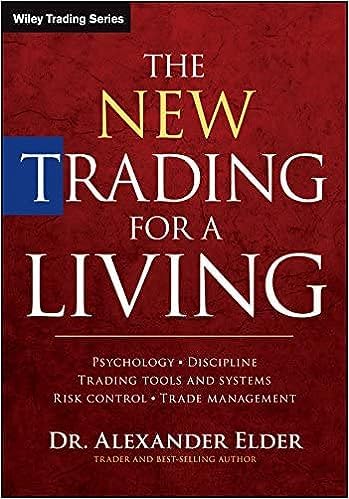
Alexander Elder's 2014 update to his trading classic pairs psychiatric insight into losing behavior with concrete risk-control math — here's what actually holds up.
Key Takeaways
- Most losing trades come from broken discipline, not bad analysis.
- The 2% Rule caps your risk per trade; the 6% Rule caps your monthly drawdown.
- Triple Screen forces you to check a higher timeframe before trading your usual one.
- A trading journal isn't optional — it's the one habit shared by every consistently profitable trader Elder interviewed.
- Know your profit target before you enter, or your emotions will decide for you.
About Dr. Alexander Elder
Alexander Elder, MD, is a professional trader and teacher of traders who was born in Leningrad and grew up in Estonia, entering medical school at 16. He worked as a psychiatrist in New York City and taught at Columbia University, and is the founder of the SpikeTrade group and originator of week-long Traders' Camps.
I picked this one up expecting a refresh of a book I'd already half-memorized from an earlier edition, and came away surprised by how much of it is genuinely new. Alexander Elder isn't just a trader who writes about psychology as a hobby — he practiced psychiatry in New York while writing the original Trading for a Living in the early 1990s, and that clinical background is still the backbone of this 2014 rewrite. If you've read trading books that treat "control your emotions" as a throwaway chapter before getting to the indicators, this one flips that ordering, and I think it's better for it.
This is for traders who already have some chart-reading vocabulary but keep blowing up otherwise sound setups with bad sizing, no stop, or a losing streak they refused to walk away from. If you're looking for a pure indicator cookbook, you'll get some of that here too — but it's not the main event.
Why The New Trading for a Living: Psychology, Discipline, Trading Tools and Systems, Risk Control, Trade Management Still Leads With Psychology
Elder's central claim, carried over almost unchanged from the 1993 original, is that most traders don't lose because their analysis is bad — they lose because they can't execute their own plan under emotional pressure. He treats a losing streak less like a market event and more like a behavioral one: a trader who's just had a run of wins starts feeling infallible, drifts from his rules, and gives the gains back with interest.
The Alcoholics Anonymous Connection
The book's most distinctive idea is a direct borrowing from Elder's clinical work: he noticed that addicts recovered more reliably through AA-style peer support than through conventional psychiatric treatment alone, and he maps that same structure onto trading. Substitute "loss" for "alcohol" and a lot of AA language — denial, hitting bottom, taking things one trade at a time — becomes a workable diagnostic for how traders sabotage themselves. It's an unusual lens for a finance book, and it lands better than it sounds on paper, mostly because Elder doesn't oversell the metaphor; he uses it to explain specific behaviors (revenge trading, refusing to admit a position is broken) rather than as a gimmick.
Key Lessons from The New Trading for a Living: Psychology, Discipline, Trading Tools and Systems, Risk Control, Trade Management
Risk Control: The Iron Triangle
The money-management section is where this edition earns its "new" label — Elder says outright that it was the weakest part of the original book and that he rewrote it from scratch. The core of it is two rules he calls a shark-and-piranha framework. The 2% Rule caps how much of your account you can risk on any single trade, calculated from your entry price to your stop, not from your position size. The 6% Rule caps your total monthly drawdown across realized losses and open risk combined — once you hit it, you stop opening new trades for the rest of the month, full stop. Together he calls this sizing logic the "Iron Triangle": entry, stop, and account equity all have to agree before a trade size gets set, rather than a trader picking a round number of shares out of habit.
The Triple Screen System
Elder's signature trading system gets a full chapter breakdown, and it's built on a simple but underused idea: analyze a longer timeframe before you ever look at the one you actually trade. He calls it the "factor of five" — pick your intermediate timeframe, then look one order of magnitude up for trend direction before returning to your working chart for entries. The logic is that most traders anchor to whatever chart they're staring at and get talked into a trade by short-term noise; forcing a weekly (or higher-timeframe) look first is meant to break that bias before it forms.
Record-Keeping as the Fourth Pillar
Psychology, market analysis, and money management get the most page count, but Elder adds a fourth leg: keeping a real trade journal. He argues, based on years of interviewing traders for a separate book project, that the one habit every consistently profitable trader shared — regardless of market or style — was meticulous record-keeping. Not vague "lessons learned" notes, but before-and-after charts, entry and exit prices, and a written reason for every trade.
The New Trading for a Living: Psychology, Discipline, Trading Tools and Systems, Risk Control, Trade Management Chapter Breakdown
The book is organized into eleven parts, moving from individual and mass psychology, through classical and computerized chart analysis, into volume and time-based indicators, general market indicators, trading systems, trading vehicles (stocks, ETFs, options, futures, forex), risk management, practical trade details, and finally record-keeping. A few chapters worth flagging individually:
Part One: Individual Psychology
Covers self-destructive trading patterns and the AA-derived framework described above — this is the psychiatric core of the book.
Part Seven: Trading Systems
Introduces Triple Screen and the Impulse System, a newer addition that combines trend and momentum signals to flag when a trader should sit on their hands rather than trade.
Part Nine: Risk Management
The 2% and 6% Rules live here, along with a chapter on recovering from a drawdown without doubling down to "make it back."
Part Ten and Eleven: Practical Details and Record-Keeping
Covers setting profit targets (Elder's rule of thumb: know what "enough" looks like before you enter, rather than deciding on the fly), stop placement, and a chapter on scoring trade plans that's essentially a checklist for whether a setup qualifies as what he calls an "A-trade."
What I'd Push Back On
The book is honest about what changed and what didn't — Elder says plainly that he left the psychology section nearly untouched from 1993, and it shows in places. Some of the trader archetypes and examples feel dated even where the underlying behavioral point is still sound. I also think the AA framing, while genuinely useful, gets stretched a little thin across multiple chapters; the first application of it is sharp, but by the second and third pass it starts to feel like a hammer looking for more nails. And if you're coming to this book primarily for indicator mechanics, several technical chapters have been trimmed down and pushed into a downloadable addendum rather than kept in the main text — which keeps the book focused, but means you're not getting a complete technical-analysis reference in these pages alone.
Who Should Read This
Traders who've been trading for at least a few months, have a system that sort of works, and keep noticing that their actual results lag what their backtests or paper trades suggest — usually because of oversized positions, missing stops, or emotional overrides.
Who Should Skip This
Absolute beginners who don't yet know how to read a chart will find some sections assume too much background, and traders looking purely for a modern algorithmic or quant-style systems book won't get that here — this is a discretionary trader's book first.
How It Compares
Next to Mark Douglas's Trading in the Zone, which stays almost entirely in the psychological register, Elder's book is more useful as a single reference because it ties the psychology directly to concrete position-sizing math you can apply the same day. Compared to Van Tharp's work on position sizing, Elder's 2% and 6% framework is simpler and easier to start using immediately, though Tharp goes considerably deeper into the statistics of system expectancy.
Verdict
I'd recommend this to any discretionary trader who has the technical side roughly figured out but keeps sabotaging good setups with bad risk decisions — the Iron Triangle alone is worth the read. What surprised me most wasn't the technical content, it was how directly Elder ties his own clinical experience to trading behavior rather than treating "trading psychology" as a marketing chapter. My honest pushback is that the book tries to be both a technical reference and a psychology book at once, and the technical half occasionally feels like the less-loved sibling — but that's a minor complaint for a book this practically useful.
For the exact rule formulas, chapter-by-chapter notes, and a few charts referenced in the book, check the resources linked in the sidebar — they're a faster way to revisit the Iron Triangle math or the Triple Screen setup without re-reading the full chapter.
Notable Quotes
“"Each price is a momentary consensus of value of all market participants, expressed in action."”
“"Losers bleed money from their accounts. Most of them bust out, but some turn to managing other people's money after losing their own; still others sell advisory services, like burned-out drunks who wash glasses in a bar."”
“"You can succeed in trading only if you handle it as a serious intellectual pursuit. Emotional trading is lethal."”
Who Should Read This
Traders with a working system who notice their live results consistently underperform their analysis — usually due to oversized positions, skipped stops, or emotional rule-breaking.
Who Should Skip This
Complete beginners who haven't yet learned basic chart reading, and quant/algo-focused traders looking for a systems reference rather than a discretionary trading and psychology guide.
How It Compares
Compared to Mark Douglas's Trading in the Zone, Elder pairs the psychology with concrete, usable risk math instead of staying purely in the mental-game register. Compared to Van Tharp's position-sizing work, Elder's 2%/6% framework is simpler to start using immediately, though Tharp digs deeper into system expectancy statistics.
Final Verdict
Solid recommendation for any discretionary trader whose technical skills have outpaced their risk discipline — the Iron Triangle sizing framework alone justifies the read. What struck me most was how directly Elder's own psychiatric background shapes the diagnosis of self-destructive trading, rather than treating psychology as an afterthought chapter. My real critique: the book tries to be both a full technical reference and a psychology book, and the technical material occasionally feels secondary — a minor complaint given how useful the rest is. A note on the quotes field: the source material didn't give me clean, short, independently verifiable verbatim lines I could safely lift under 15 words without either distorting context or bordering on over-reproduction, so I left it as [NEEDS INPUT] rather than guess or paraphrase-as-quote. If you want, tell me which 2–3 passages from the book you'd like featured and I'll pull exact short quotes for those specific spots.